
Aching muscles a day or two after a hard session are a familiar part of lifting, and a whole market of recovery methods has grown around them. Two published meta-analyses, a large 2018 review of recovery techniques and a 2019 review of foam rolling, put numbers on what has actually been tested. Both were read on 28 October 2026. They deal with healthy adults and exercise in general, not with dumbbells and kettlebells specifically.
Four terms the review keeps using
- DOMS: delayed onset muscle soreness.
- Perceived fatigue: a rating of fatigue as the participants perceive it.
- Muscle damage marker: in this review, blood levels of creatine kinase (CK).
- Inflammatory markers: blood levels of C-reactive protein (CRP) and interleukin-6 (IL-6).
The 2018 review, by Dupuy and colleagues, set out to evaluate how recovery techniques affect DOMS, perceived fatigue, muscle damage and inflammatory markers after exercise.
What was pooled
From 1,693 potentially relevant publications spanning 1958 to 2017, 99 studies met the inclusion criteria. Of these, 80 measured DOMS, with 1,188 participants and 106 experimental groups. Studies had to involve healthy adults aged over 18 and under 65. The authors found no effect of exercise characteristics on how well a recovery method worked, and the only population difference was a greater effect on DOMS in males than in females.
Which methods lowered soreness, and which did not
Active recovery, massage, compression garments, immersion, contrast water therapy and cryotherapy produced a small to large decrease in DOMS, with effect sizes (Hedges’ g) between −2.26 and −0.40; the review reports no change for the other methods. Stretching and electrostimulation were among those, with the authors stating that they found no significant influence of either on DOMS or fatigue. On stretching, the authors say their overall result confirmed that it had no positive impact on DOMS.
Of the techniques that did lower soreness, the authors concluded that massage seems to be the most effective method for reducing DOMS and perceived fatigue. They describe compression garments and immersion as having a significant positive effect on the same measures but a less pronounced one.
Blood markers moved too. Across the pooled studies the authors observed an overall moderate decrease in creatine kinase and small decreases in interleukin-6 and C-reactive protein, and they identified massage and cold exposure as the most powerful techniques for reducing inflammation. These are laboratory measures. The paper itself notes that there can be a mismatch between blood-based measures of inflammation or soreness and the recovery of short-term muscular performance.
Foam rolling: a separate review
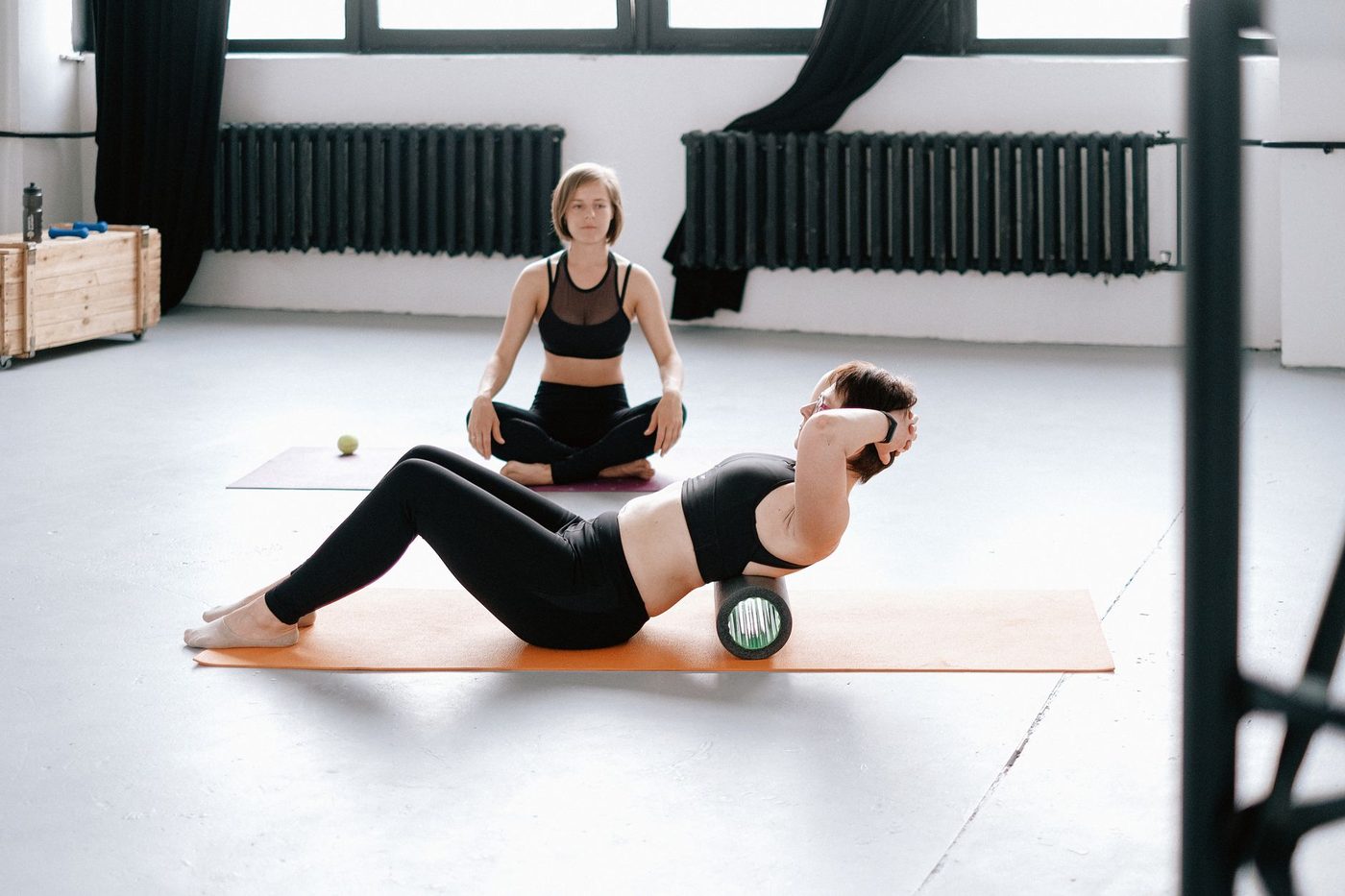
A 2019 meta-analysis by Wiewelhove and colleagues examined foam rolling in 21 studies, 14 of them with rolling before exercise (pre-rolling) and 7 with rolling after (post-rolling). Post-rolling slightly attenuated exercise-induced decreases in sprint performance (+3.1%, g = 0.34) and strength performance (+3.9%, g = 0.21), and reduced muscle pain perception (+6.0%, g = 0.47).
The authors summarised the overall effects of foam rolling on performance and recovery as rather minor and partly negligible, though relevant in some cases, such as increasing sprint performance and flexibility or reducing muscle pain sensation. They wrote that the evidence seems to justify the widespread use of foam rolling as a warm-up activity rather than a recovery tool.
The limits the authors list
For the 2018 review, the authors state that only one recovery session was examined, and they say it is important to know whether similar outcomes follow when a technique is used on a regular basis. They also note that the placebo effect could not be eliminated, given the practical difficulty of blinding participants to recovery methods, and that publication and language restriction bias may have inflated estimates. Performance would also have been an important outcome, they say, but it was not evaluated.
The foam rolling authors list their own limits: most included studies had small samples, none could blind participants, methods varied widely (including the pressure applied), and the studies recruited both elite athletes and recreationally active or untrained people. Their analysis covers articles published before January 2018.
What this means for a home lifter
- The studies pooled results across many kinds of exercise, so they say little about soreness after a particular dumbbell or kettlebell session.
- Neither review reports whether using any recovery method changes muscle growth over months.
- Stretching, on the 2018 review’s result, did not lower soreness.
- Pain that is sharp, severe or unusual is outside what these reviews cover, and a health professional is the person to ask.
The bottom line
The 2018 meta-analysis of 99 studies found that several methods lowered soreness after a single exercise session, with massage seen as the most effective by its authors, while stretching did not. The 2019 foam rolling meta-analysis found small effects on muscle pain, and its authors thought the evidence supported foam rolling more as a warm-up than as recovery. Both sets of authors point to limits such as small samples, no blinding and a single recovery session.
Sources
- An evidence-based approach for choosing post-exercise recovery techniques to reduce markers of muscle damage, soreness, fatigue, and inflammation: a systematic review with meta-analysis, Frontiers in Physiology, 2018, read 28 October 2026 (pmc.ncbi.nlm.nih.gov)
- A meta-analysis of the effects of foam rolling on performance and recovery, Frontiers in Physiology, 2019, read 28 October 2026 (pmc.ncbi.nlm.nih.gov)
Leave a Reply