
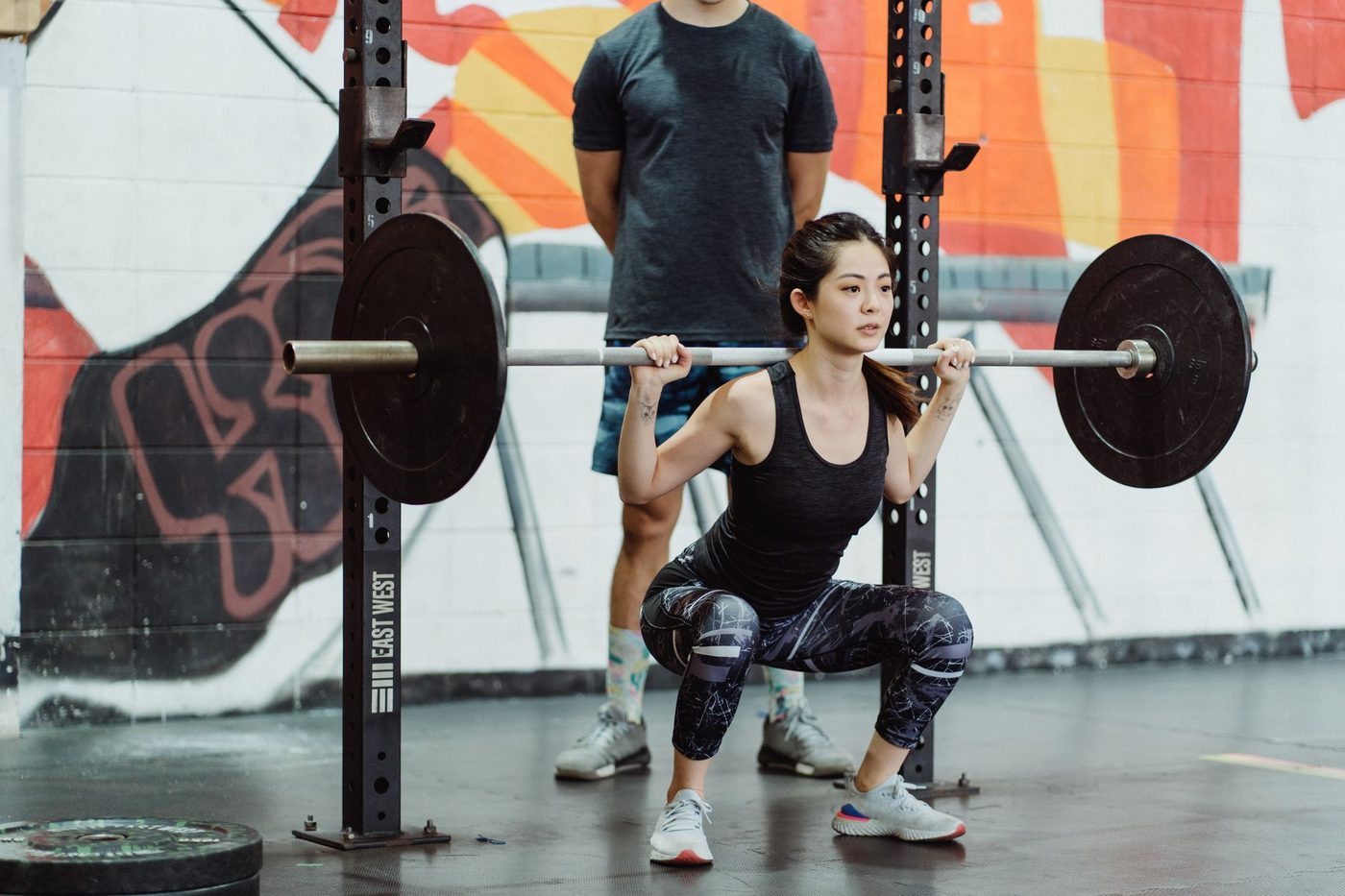
In the 2026 American College of Sports Medicine (ACSM) overview of 137 systematic reviews covering more than 30,000 participants, voluntary strength was enhanced by lifting heavier loads (80% or more of one-repetition maximum), through a complete range of motion, for 2 to 3 sets, at the beginning of training sessions, and on 2 or more sessions a week. Range of motion is one item in that list, and three smaller reviews look at it directly. This guide sets them out. It is general information for healthy adults, not medical advice, and none of the abstracts read is specific to dumbbells or kettlebells.
What the ACSM overview did and did not find
The ACSM position stand is an overview of reviews. It included systematic reviews of randomised trials in healthy adults aged 18 or over who completed resistance training for at least 6 weeks, compared with no exercise or with an alternative resistance training programme. Its summary says that few prescription variables affected the primary adaptations. Beyond the strength variables above, it says training to momentary muscle fatigue, equipment type, exercise complexity, set structure, time under tension, blood flow restriction and periodization did not consistently affect training outcomes.
Two observations on the abstract’s wording: complete range of motion is listed for strength, and not for hypertrophy, power or endurance; and the abstract gives no definition of “complete”.
Three reviews side by side
| Review | Studies | What the abstract reports |
|---|---|---|
| Schoenfeld and Grgic, 2020 (SAGE Open Medicine) | 6 studies, 135 participants (127 men and 8 women) | Full range of motion had beneficial effects on lower-body hypertrophy compared with partial. Research on the upper limbs was limited and conflicting. No study had examined the trunk. |
| Pallarés and colleagues, 2021 (Scandinavian Journal of Medicine & Science in Sports) | 16 studies | Full range of motion produced significantly greater adaptations than partial for muscle strength (effect size 0.56) and lower-limb hypertrophy (0.88). Functional performance favoured full range (0.44) but not significantly. No significant difference was found for muscle thickness, pennation angle and fascicle length (0.28). |
| Kassiano and colleagues, 2023 (Journal of Strength and Conditioning Research) | 11 studies | Full range, and partial range in the initial part of the movement, gave greater hypertrophy of the rectus femoris, vastus lateralis, biceps brachii and brachialis (distal sites) than partial range in the final part. One comparison went the other way: partial range in the middle part gave greater triceps brachii hypertrophy than full range (effect size 1.21). |
What the longer-muscle-length finding says
The Kassiano review concluded that when training at a longer muscle length, through either partial or full range of motion, some muscles such as the quadriceps femoris, biceps brachii and triceps brachii tend to experience optimal growth. It added that partial range in the initial part of the excursion, in combination with full range training, should be considered when prescribing hypertrophy-oriented programmes. The Schoenfeld and Grgic review separately noted that some evidence indicates the response to range of motion may be muscle-specific, a hypothesis it said warrants further study.
Reading the evidence with care
- The reviews pool studies of resistance training in general. The abstracts do not say how many used dumbbells or kettlebells.
- The Schoenfeld and Grgic review had 8 women among its 135 participants.
- Pallarés and colleagues describe a lack of consensus and high controversy about the most effective range of motion. Their significant results were for strength and lower-limb hypertrophy.
- The effect sizes in the table come from different reviews, outcomes and comparisons, and are listed as each abstract reports them.
What NHS instructions look like
The NHS “Strength exercises” page (page last reviewed 28 February 2024) says not to worry if you have not done much for a while, and it does not use the phrase “range of motion”. Its mini-squat instruction says to bend the knees slowly as far as is comfortable. Its biceps curl, done with a pair of light weights, says to bend the arms slowly until the weight reaches the shoulder and then to lower slowly. The page says to build up slowly and to try these exercises at least twice a week.
For the weekly target, the NHS guidelines for adults aged 19 to 64 (last reviewed 22 May 2024) say to do strengthening activities that work all the major muscle groups (legs, hips, back, abdomen, chest, shoulders and arms) on at least 2 days a week, to the point where you need a short rest before repeating the activity. Examples include lifting weights, working with resistance bands and exercises that use your own body weight. The page advises speaking to your GP first if you have not exercised for some time, or if you have medical conditions or concerns. For choosing a load, see the guide to how to choose the right dumbbell weight; for exercises by muscle group, see dumbbell exercises for every muscle group.
The bottom line
The ACSM overview lists a complete range of motion among the variables that enhanced voluntary strength. Two reviews report an advantage for full range over partial in lower-body outcomes, and the Kassiano review found full range and initial-part partial range both ahead of final-part partial range at several sites. Research on the upper limbs was described as limited and conflicting, and one comparison favoured partial range for triceps growth. None of the abstracts is specific to dumbbells or kettlebells.
Sources
- American College of Sports Medicine Position Stand. Resistance Training Prescription for Muscle Function, Hypertrophy, and Physical Performance in Healthy Adults: An Overview of Reviews, 2026 (europepmc.org)
- Effects of range of motion on muscle development during resistance training interventions: A systematic review, SAGE Open Medicine, 2020 (pubmed.ncbi.nlm.nih.gov)
- Effects of range of motion on resistance training adaptations: A systematic review and meta-analysis, Scandinavian Journal of Medicine & Science in Sports, 2021 (pubmed.ncbi.nlm.nih.gov)
- Which ROMs Lead to Rome? A Systematic Review of the Effects of Range of Motion on Muscle Hypertrophy, Journal of Strength and Conditioning Research, 2023 (pubmed.ncbi.nlm.nih.gov)
- Strength exercises, NHS, page last reviewed 28 February 2024 (nhs.uk)
- Physical activity guidelines for adults aged 19 to 64, NHS, page last reviewed 22 May 2024 (nhs.uk)
Leave a Reply