
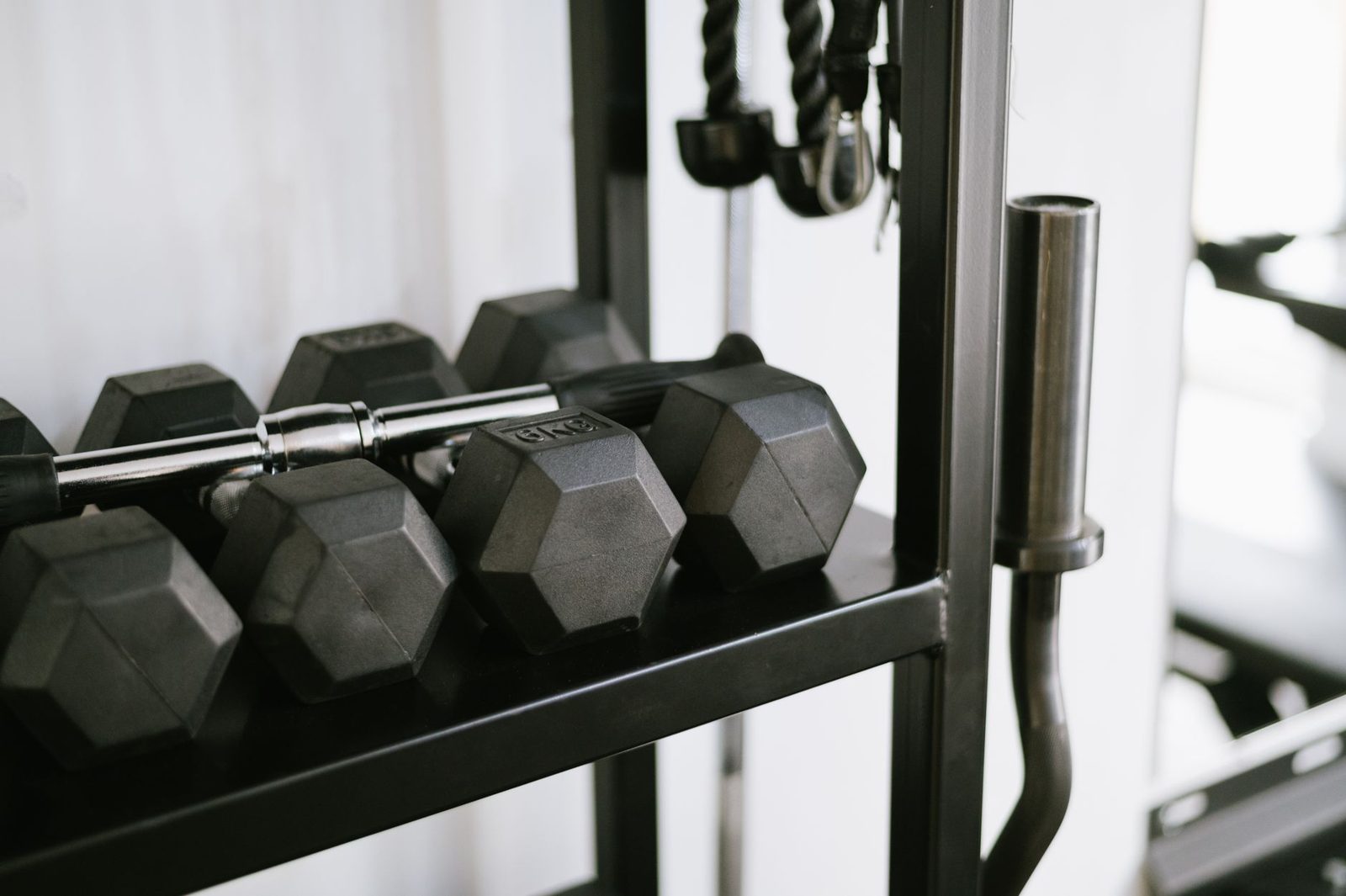
Quick answer: dumbbells come in two broad families. Fixed dumbbells, such as rubber hex, chrome, cast iron and neoprene coated, are one weight each and are quick to grab. Adjustable dumbbells, either plate-loaded spin-lock handles or selectorised designs with a dial or pin, give many weights in a small footprint. The right type depends on how heavy you need to go, your space, your floor and how quickly you like to change weight.
Why the type of dumbbell matters
All dumbbells do the same basic job: they let you load one hand at a time, so you can train each side independently and move through a natural path. But the shape, coating and adjustment system affect comfort, safety, noise, floor protection and how easily you can progress. Since the NHS recommends working all major muscle groups on at least two days a week, and your legs and back will usually need heavier loads than your arms, it pays to choose a type that can grow with you.
Fixed dumbbells
Rubber hex dumbbells
These have hexagonal heads coated in rubber, usually with a knurled steel or chrome handle. The flat sides stop them rolling away when you put them down, which is useful for exercises such as renegade rows or when you rest them on the floor between sets. The rubber coating reduces noise and protects floors.
Round rubber or urethane dumbbells
Round heads are common in commercial gyms and are coated in rubber or urethane, an alternative coating material. They feel comfortable in the hand, but round heads can roll, so store them on a rack.
Chrome dumbbells
Chrome dumbbells are all metal with a polished finish. They are compact for their weight and easy to wipe clean, which makes them popular for lighter weights. Because they are bare metal, they are noisier and less kind to floors if put down carelessly.
Cast iron dumbbells
Plain or painted cast iron is simple and durable. It is prone to surface rust if kept somewhere damp, and it can chip paint or flooring on impact.
Neoprene or vinyl coated dumbbells
These light dumbbells have a soft coating that is comfortable to hold and comes in bright colours for each weight. They suit mobility work, rehabilitation exercises prescribed by a professional, and the gentle strength routines the NHS suggests, such as biceps curls with light weights. They are rarely made in heavier sizes.
Adjustable dumbbells
Plate-loaded spin-lock handles
A bar with threaded ends takes small weight plates, which are held in place by screw-on collars. They are simple and cheap to expand, but changing weight takes time, and the collars must be checked every session because they can loosen. Plates need to match the handle’s sleeve diameter.
Selectorised dumbbells
These use a dial, pin or slide mechanism to pick up a chosen number of plates from a cradle. Weight changes take seconds and one pair can replace a whole rack. The trade-offs are a bulkier shape at lighter weights, a mechanism that must be treated carefully, and fixed weight increments set by the design.
Comparison table
| Type | Main strengths | Watch out for | Good for |
|---|---|---|---|
| Rubber hex | Does not roll, quieter, floor friendly | Rubber smell when new; takes space as a set | General home training |
| Round rubber or urethane | Durable, comfortable, gym feel | Rolls if not racked | Racked collections |
| Chrome | Compact, easy to clean | Noisy, hard on floors | Lighter weights, isolation work |
| Cast iron | Simple, hard wearing | Rust and chipping | Dry garages and sheds |
| Neoprene or vinyl | Soft grip, colour coded | Light weights only | Gentle strength and mobility work |
| Spin-lock adjustable | Expandable, compact | Slow changes; collars can loosen | Tight budgets and small spaces |
| Selectorised adjustable | Very fast weight changes, one pair | Bulky shape; mechanism care; fixed steps | Small spaces, circuits |
Handles and grip
Look at the handle as closely as the head. Knurling, the cross-hatched texture on metal handles, improves grip when your hands are sweaty. A handle that is too thick can limit how long you can hold heavier weights, while a very smooth handle can slip. Contoured handles can be more comfortable for pressing but may feel odd for rows. If possible, hold a dumbbell before you commit to a whole set.
Safety considerations
An analysis of US emergency department data by Kerr and colleagues found that weights dropping on people were the most common cause of weight training injuries, and 90.4% of injuries involved free weights. A few habits reduce that risk:
- Check that heads are firmly fixed and that adjustable collars or selectors are fully engaged before every set.
- Store dumbbells on a rack or low shelf, not stacked or left on the floor.
- Choose shapes that will not roll if you have children, pets or a sloping floor.
- Keep children away from equipment; the same study found young children were more likely to suffer hand injuries.
Looking after your dumbbells
- Wipe them down after use to remove sweat, which speeds up rust and wear.
- Keep them dry. Garages and sheds can be damp in a UK winter; a dehumidifier or sealed storage helps iron and chrome.
- Air out new rubber in a ventilated space if it has a strong smell.
- Inspect regularly for loose heads, cracked coatings, bent handles or worn threads.
- Treat adjustable mechanisms gently and follow the maker’s instructions; do not drop selectorised dumbbells.
How to choose
If you train at home with limited space, an adjustable pair or a small set of fixed rubber hex dumbbells covers most needs. If several people train together, or you like to move quickly between exercises, a fixed set on a rack is convenient. Think about the heaviest weight you are likely to need for squats and rows in a year’s time, as well as the lightest you need for shoulder raises today.
Health note: this article is general education, not medical advice. If you have a health condition, an injury, are pregnant, or have not exercised for a long time, check with your GP or a physiotherapist before starting or changing a training plan, and stop if an exercise causes pain.
Sources
- Physical activity guidelines for adults aged 19 to 64, NHS (nhs.uk)
- Strength exercises, NHS (nhs.uk)
- Kerr, Collins and Comstock (2010) Epidemiology of weight training-related injuries presenting to United States emergency departments, 1990 to 2007, American Journal of Sports Medicine (europepmc.org)
Leave a Reply