
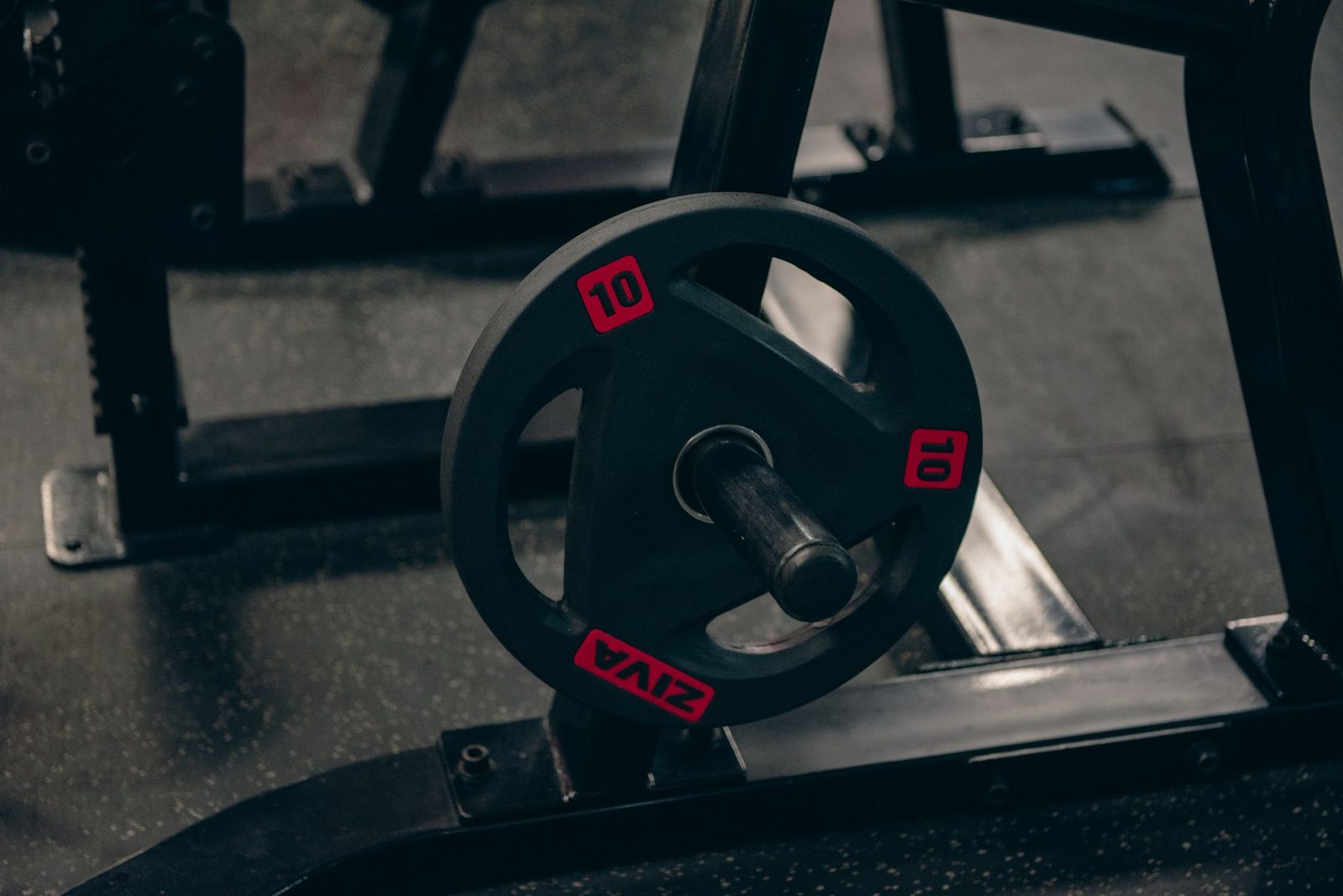
Quick answer: Olympic barbells have 50 mm sleeves and take plates with a matching large centre hole. International rules set the men’s bar at 20 kg and the women’s bar at 15 kg. Standard bars are thinner at the ends, typically take plates with holes of around 27 to 31 mm, and vary widely in length and weight. The two systems are not interchangeable, so match your plates to your bar and always use collars.
Why this matters
Barbells and plates are the backbone of free weight training, and plates also fit many plate-loaded dumbbell handles. Yet the terms Olympic and standard confuse many buyers. Get it wrong and your plates may not fit your bar, or may fit loosely, which is a safety issue. This guide explains the differences in plain terms.
The Olympic barbell
The International Weightlifting Federation (IWF) sets the rules for competition equipment. Its technical rules state that a men’s bar weighs 20 kg and a women’s bar weighs 15 kg, and that each barbell must be fitted with two collars weighing 2.5 kg each in competition.
The same rules set out the dimensions. The men’s bar is 220 cm long with a 28 mm grip section, and the women’s bar is 201 cm long; other published specifications give its grip as 25 mm. On both bars the outer ends, called sleeves, where the plates go, are 50 mm in diameter, and the rules state that the sleeve must rotate freely.
Outside competition, many training bars follow this Olympic pattern of 50 mm sleeves, even if their exact weight, length and grip vary. If a bar is described as Olympic, check the stated weight rather than assuming it is 20 kg.
Standard barbells
Standard bars, sometimes called one inch bars, are common in older home sets. The ends of standard bars usually do not rotate, and they commonly take plates with centre holes from around 27 mm to 31 mm. Their length ranges from roughly 1.2 metres to over 2 metres and their weight often falls somewhere between 4 kg and 10 kg. These dimensions are not governed by a single international standard in the way competition bars are, so they vary between makers.
That variation is the main practical headache. Plates with smaller holes may not fit a slightly thicker standard bar, and plates with larger holes may sit loosely.
Comparison table
| Feature | Olympic system | Standard system |
|---|---|---|
| Sleeve diameter | 50 mm | Thinner, varies between makers |
| Plate centre hole | Sized for 50 mm sleeves | Around 27 to 31 mm, varies |
| Bar weight | Competition bars: 20 kg men’s, 15 kg women’s | Often around 4 to 10 kg |
| Rotating sleeves | Yes | Usually no |
| Rules body | IWF for competition equipment | No single standard |
| Interchangeable with the other system? | No | No |
Weight plates explained
IWF rules list competition discs from 25 kg down to 0.5 kg, each with a standard colour: 25 kg red, 20 kg blue, 15 kg yellow, 10 kg green and 5 kg white, with smaller change plates following the same colour sequence from 2.5 kg red down to 0.5 kg white. Competition discs of 10 kg and above have a diameter of 45 cm. Training discs may be made in black with coloured rims.
At home you will mostly see three types of plate:
- Cast iron plates: thin and hard wearing, but noisy and not designed to be dropped.
- Rubber coated plates: iron plates with a rubber coating, quieter and kinder to floors.
- Bumper plates: plates coated in solid rubber so they are safer to drop from overhead, as in weightlifting.
Whatever type you use, check the actual weight marked on each plate and add the bar and collars to work out the total load you are lifting.
Working out the total weight
A simple formula avoids confusion: total load equals bar weight, plus collars, plus all the plates. For example, a 20 kg bar with two 10 kg plates and two light spring collars is a little over 40 kg. A lighter standard bar with the same plates would be much less. Write the bar weight down in your training log so your progress numbers stay consistent.
Collars are not optional
Collars stop plates sliding off the sleeve when the bar tilts. An analysis of US emergency department data by Kerr and colleagues found that the most common cause of weight training injuries was weights dropping on the person, at 65.5% of cases, and that 90.4% of injuries involved free weights. Secure, well-fitting collars and matched plates are a simple way to reduce that risk.
Barbell safety at home
- Load and unload plates evenly, one side then the other, so the bar does not tip.
- Lift plates off the floor with good handling technique. The Health and Safety Executive advises keeping a load close to your waist, avoiding twisting your back, and not lifting more than you can easily manage.
- Store plates on a proper holder rather than leaning them against walls where they can roll or fall.
- Check sleeves and collars for wear, and never use a plate that fits loosely.
- For heavy pressing or squatting, only lift where you can safely fail a rep, for example with safety supports. If you cannot set that up, choose dumbbell or kettlebell alternatives that you can drop to the side.
Caring for bars and plates
Keep iron equipment dry to limit rust, wipe sweat and chalk off the bar after sessions, and store it off the floor where possible. A light brush of the knurling, the textured grip area, keeps it clean. Rubber plates benefit from being kept out of direct sunlight and away from heat sources.
Which system should you choose?
If you are starting from scratch and plan to lift heavier over time, the Olympic system offers more consistency between bars and plates. If you already own a standard set, it can serve you well, provided every plate fits snugly and you use collars. The key rule is simple: do not mix systems, and always know exactly what your bar weighs.
Health note: this article is general education, not medical advice. If you have a health condition, an injury, are pregnant, or have not exercised for a long time, check with your GP or a physiotherapist before starting or changing a training plan, and stop if an exercise causes pain.
Sources
- Technical and Competition Rules and Regulations, International Weightlifting Federation (2024 edition, mirror copy) (iwlf.in)
- Barbell, Wikipedia (en.wikipedia.org)
- Kerr, Collins and Comstock (2010) Epidemiology of weight training-related injuries presenting to United States emergency departments, 1990 to 2007, American Journal of Sports Medicine (europepmc.org)
- Good handling technique, Health and Safety Executive (hse.gov.uk)
Leave a Reply