All guides

  • Free Weights vs Machines: What the Research Actually Says

    Free Weights vs Machines: What the Research Actually Says

    Quick answer: for general strength and muscle growth, free weights and machines both work. A 2023 systematic review and meta-analysis found no significant difference in muscle growth between the two, and strength gains were largely specific to the equipment people trained with. Free weights ask more of your balance and coordination and need very little space, which is why they suit home training so well. The best choice is the one you will use consistently, with good technique.

    What counts as a free weight?

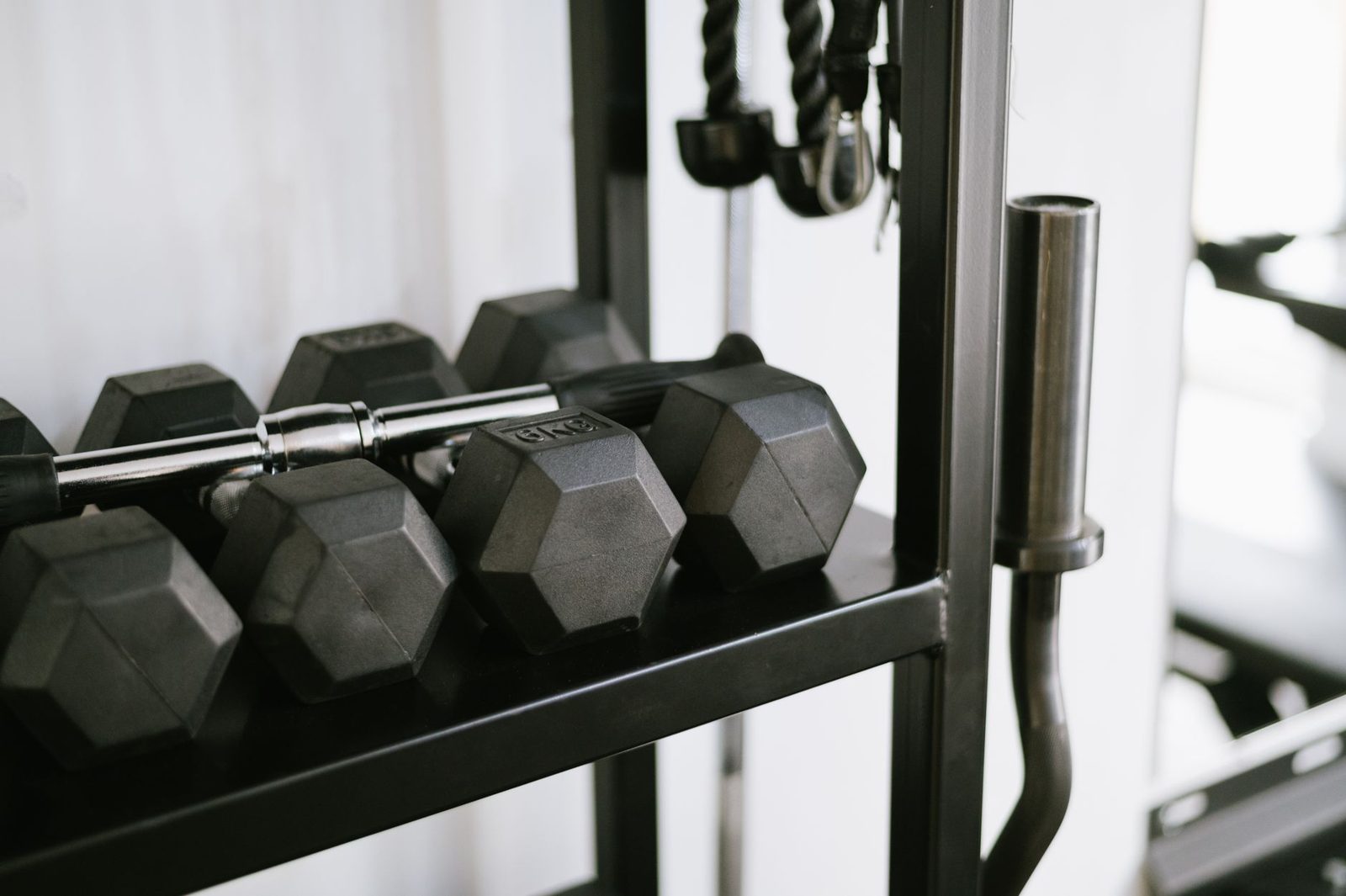
    A free weight is any load you hold and control yourself, with nothing guiding its path. That means dumbbells, kettlebells, barbells and weight plates. A machine, by contrast, fixes the movement to a track, a cable or a lever, so the equipment rather than your body decides where the weight travels.

    That single difference, who controls the path of the load, explains most of the pros and cons below. With a free weight, your muscles have to lift the load and also keep it steady in every direction. With a machine, a lot of that stabilising work is done for you.

    What the evidence says

    The most useful summary of direct comparisons is a 2023 systematic review and meta-analysis by Haugen and colleagues, published in BMC Sports Science, Medicine and Rehabilitation. It pooled 13 studies with 1,016 adult participants who trained for at least six weeks with either free weights or machines.

    • Muscle growth: the review found no significant difference in hypertrophy between free-weight and machine groups.
    • Strength: when strength was tested with free weights, the free-weight groups improved significantly more. When it was tested on machines, the machine groups tended to improve more. In other words, you get best at the thing you practise.
    • Jumping: there was no significant difference in countermovement jump performance.

    The authors concluded that, for strength and muscle size, the choice between free weights and machines comes down to individual preferences and goals. They also noted that free weights involve more degrees of freedom, which can mean a steeper learning curve for complete beginners.

    The American College of Sports Medicine (ACSM) reached a similar view in its 2026 resistance training position stand, which drew on 137 systematic reviews. It reported that the type of equipment, machines versus free weights, did not consistently change outcomes for the average healthy adult. The biggest gain, according to ACSM, comes from moving from no resistance training to any resistance training, and training all major muscle groups at least twice a week.

    Side by side comparison

    Factor Free weights Machines
    Muscle growth Similar to machines in pooled research Similar to free weights in pooled research
    Strength carryover Greater when strength is tested with free weights Tends to be greater when tested on machines
    Balance and coordination demand Higher, you stabilise the load yourself Lower, the path is fixed
    Learning curve Steeper for complete beginners Gentler
    Exercise variety Very wide from a small set of equipment Usually one or two movements per machine
    Space needed at home Small, a set of dumbbells or a kettlebell fits in a corner Large, each station needs floor space
    Unilateral (one side) training Easy with dumbbells and kettlebells Possible on some machines only

    Why free weights feel harder

    If you have ever pressed a pair of dumbbells and found you could not handle as much as on a barbell or machine, that is normal. A 2011 study by Saeterbakken and colleagues compared chest pressing on a Smith machine, a barbell and dumbbells in trained men. The dumbbell one-repetition maximum was about 14% lower than the Smith machine and 17% lower than the barbell. Chest and front shoulder muscle activity was similar across the three, while biceps activity rose as the stability demand increased.

    Haugen and colleagues offer an explanation: when a movement is less stable, muscles prioritise keeping the load steady over producing force in the direction of the lift. So a lighter dumbbell can still be a hard, productive set.

    The case for free weights at home

    For a home trainer, free weights have some clear practical strengths:

    • Space and versatility: a set of dumbbells or one or two kettlebells can train every major muscle group the NHS lists, legs, hips, back, abdomen, chest, shoulders and arms.
    • Real-world carryover: because strength gains are specific to how you train, lifting and controlling free loads is close to how you lift shopping, children or bags in daily life.
    • Working each side: dumbbells and kettlebells let you train one arm or one leg at a time, which makes differences between sides easy to spot.
    • Room to progress: you can make an exercise harder by adding weight, reps, sets or control, without needing new equipment for every movement.

    When a machine might suit you better

    Haugen and colleagues suggested that machines could suit inexperienced lifters because the movement is simpler and more stable. If you have poor balance, are returning after a long break, or struggle to learn a movement, a guided option or very light free weights with coaching can be a sensible start. Many people use both.

    On safety, the same review noted that cross-sectional studies report more injuries with free weights, but questioned whether free weights actually cause more injuries, because there are few long-term experimental studies. An analysis of US emergency department data by Kerr and colleagues found that 90.4% of weight training injuries involved free weights, and that the most common mechanism was weights dropping on the person. That points to handling, storage and loading habits rather than the exercises themselves, which is where good technique and a tidy training space matter most.

    How to decide

    1. Start with your goal. If you want to get better at lifting free loads, or train at home, free weights are a natural fit. If you compete in a sport that uses barbells, specificity matters and you should practise those lifts.
    2. Be honest about skill. Learn movements with a light load first. Technique before weight.
    3. Think about adherence. ACSM’s 2026 guidance stresses that programmes should reflect personal goals, enjoyment and safety so that people stick with them.
    4. Cover the basics. Whatever you choose, aim to work all major muscle groups on at least two days a week, as the UK Chief Medical Officers recommend.

    The bottom line

    There is no winner for everyone. The research shows similar muscle growth, and strength that is specific to how you train. Free weights give you a lot of training from a little equipment, build the coordination that comes with controlling a load, and fit easily into a home. Learn the movements well, progress gradually, and keep your training area organised.

    Health note: this article is general education, not medical advice. If you have a health condition, an injury, are pregnant, or have not exercised for a long time, check with your GP or a physiotherapist before starting or changing a training plan, and stop if an exercise causes pain.

    Sources

    • Haugen et al. (2023) Effect of free-weight vs. machine-based strength training on maximal strength, hypertrophy and jump performance: a systematic review and meta-analysis, BMC Sports Science, Medicine and Rehabilitation (pmc.ncbi.nlm.nih.gov)
    • ACSM unveils landmark 2026 resistance training guidelines, American College of Sports Medicine (acsm.org)
    • Saeterbakken, van den Tillaar and Fimland (2011) A comparison of muscle activity and 1-RM strength of three chest-press exercises with different stability requirements, Journal of Sports Sciences (europepmc.org)
    • Kerr, Collins and Comstock (2010) Epidemiology of weight training-related injuries presenting to United States emergency departments, 1990 to 2007, American Journal of Sports Medicine (europepmc.org)
    • Physical activity guidelines for adults aged 19 to 64, NHS (nhs.uk)
    • UK Chief Medical Officers’ physical activity guidelines (2019), Department of Health and Social Care (gov.uk)
  • Free Weight Safety and Etiquette for Home Training

    Free Weight Safety and Etiquette for Home Training

    Quick answer: most free weight injuries are avoidable. Research on emergency department cases found that weights dropping on people was the most common cause, so safe home training starts with a clear space, good handling technique, secure storage and loads you can control. Warm up, stop sets before your technique breaks down, keep children and pets away from equipment, and check with a GP or physio if you have a health condition.

    How risky is lifting weights?

    Resistance training is generally a safe activity when done sensibly. A 2017 systematic review by Keogh and Winwood of the weight-training sports, including weightlifting, powerlifting and bodybuilding, concluded that these sports appear to have relatively low rates of injury compared with common team sports. The most commonly injured areas were the shoulder, lower back, knee, elbow and wrist or hand, and strains, tendon problems and sprains were the most common types.

    The picture at home is a little different. Kerr and colleagues analysed weight training injuries seen in US emergency departments between 1990 and 2007. The most common mechanism was weights dropping on the person, at 65.5% of cases, and 90.4% of injuries involved free weights. Children aged 12 and under were more likely to injure their hands. Many of these injuries are about handling and storage, not the exercises themselves.

    Set up a safe space

    • Clear the floor. Allow room to step, lunge and swing without hitting furniture, walls or people.
    • Choose a stable surface. A flat, non-slip floor or protective mat helps with grip and protects flooring.
    • Check overhead space. Overhead presses and kettlebell swings need clearance above and in front of you.
    • Keep good light. You need to see your feet and the equipment clearly.
    • Use a solid bench or chair. The NHS advises choosing a solid, stable chair without wheels that will not slip on the surface for seated exercises.

    Lift equipment off the floor properly

    Picking up a heavy dumbbell or plate carelessly can be riskier than the exercise itself. The Health and Safety Executive’s good handling guidance, written for workplaces, translates well to the home gym:

    • Plan the lift before you do it.
    • Keep the load close to your waist for as long as possible.
    • Place your feet apart for a stable base.
    • Avoid twisting your back or leaning sideways; turn by moving your feet.
    • Do not jerk or snatch the load, as this makes it harder to control.
    • Do not lift more than you can easily manage.

    Warm up and build up

    The UK Chief Medical Officers state that starting at low durations and intensities and building up over time is the safest way to become more active. In practice, spend a few minutes moving your joints and raising your temperature, then do one or two lighter sets of your first exercise before working sets. The NHS advises building up gradually over a period of weeks.

    Technique before load

    ACSM’s 2026 resistance training guidance notes that stopping around two to three repetitions short of failure produces similar strength and muscle gains to taking every set to failure, with less fatigue. That margin is also a safety buffer. If your form changes, for example your back rounds on a deadlift or you lose control on the way down, end the set.

    Home safety checklist

    Area Check Why it matters
    Floor space Clear area around you, no trip hazards Room to move and to drop a weight to the side safely
    Equipment Handles tight, collars secure, no cracks or loose parts Loose plates and handles can fall
    Storage Weights on a rack or low shelf, not stacked high Dropping weights was the top injury mechanism in emergency data
    Children and pets Out of the room during sessions; equipment stored out of reach Young children were more prone to hand injuries
    Load A weight you can control for every rep Losing control is when accidents happen
    Body No sharp or unusual pain; not unwell Pain is a signal to stop and seek advice

    Know how to bail out

    With dumbbells and kettlebells, the safest failed rep is usually one where you can lower or drop the weight to the side, away from your feet. Before you start a set, decide what you will do if you cannot finish it. For barbell pressing or squatting at home, only go heavy if you have safety supports that can catch the bar. Without them, choose dumbbell or kettlebell versions of the exercise instead.

    Home gym etiquette

    Etiquette sounds like a commercial gym idea, but it matters at home too, especially in shared spaces.

    • Re-rack as you go. Put each weight back after the set, not at the end of the session.
    • Keep sets matched. Store pairs together so nobody grabs mismatched dumbbells.
    • Tell people you are training. Ask others to stay clear of your space during swings or overhead lifts.
    • Respect the neighbours. Place weights down rather than dropping them, and use mats to reduce noise.
    • Wipe equipment down. Sweat on handles makes them slippery and speeds up wear.

    Looking after your equipment

    Inspect your weights every few weeks. Tighten any adjustable handles or locking mechanisms according to the maker’s instructions, check rubber coatings for splits, and dry iron equipment to limit rust. Retire anything with a cracked handle, a loose head or a plate that no longer fits snugly.

    When to stop and get advice

    If you feel unwell during a session, stop. For sharp or persistent joint pain, stop the exercise and speak to a GP or physiotherapist. The NHS advises speaking to a GP first if you have not exercised for some time or have medical conditions or concerns.

    Health note: this article is general education, not medical advice. If you have a health condition, an injury, are pregnant, or have not exercised for a long time, check with your GP or a physiotherapist before starting or changing a training plan, and stop if an exercise causes pain.

    Sources

    • Keogh and Winwood (2017) The epidemiology of injuries across the weight-training sports, Sports Medicine (europepmc.org)
    • Kerr, Collins and Comstock (2010) Epidemiology of weight training-related injuries presenting to United States emergency departments, 1990 to 2007, American Journal of Sports Medicine (europepmc.org)
    • Good handling technique, Health and Safety Executive (hse.gov.uk)
    • Strength exercises, NHS (nhs.uk)
    • How to improve your strength and flexibility, NHS (nhs.uk)
    • Physical activity guidelines for older adults, NHS (nhs.uk)
    • UK Chief Medical Officers’ physical activity guidelines (2019), Department of Health and Social Care (gov.uk)
    • ACSM unveils landmark 2026 resistance training guidelines, American College of Sports Medicine (acsm.org)
  • Dumbbell Exercises for Every Muscle Group

    Dumbbell Exercises for Every Muscle Group

    Quick answer: with a few pairs of dumbbells you can train every major muscle group the NHS lists: legs, hips, back, abdomen, chest, shoulders and arms. Use goblet squats and lunges for legs, Romanian deadlifts and hip thrusts for hips, rows for the back, presses for chest and shoulders, curls and extensions for arms, and carries for the trunk. Aim for around 10 weekly sets per muscle group once you are established.

    How to use this guide

    The NHS and the UK Chief Medical Officers recommend strengthening activities that work all major muscle groups on at least two days a week. This guide lists reliable dumbbell exercises for each group, with a short coaching cue for each. Choose one or two per group for each session and rotate them over time.

    ACSM’s 2026 position stand suggests about 10 sets per muscle group per week for muscle growth. A 2017 meta-analysis by Schoenfeld, Ogborn and Krieger found a graded dose-response relationship between weekly sets and muscle growth. Beginners can start with fewer sets and build up.

    Quick reference table

    Muscle group Main exercise Alternative Key cue
    Thighs (quadriceps) Goblet squat Split squat Knees track over toes, heels down
    Hips and glutes Romanian deadlift Hip thrust with dumbbell on hips Push hips back, long spine
    Hamstrings Romanian deadlift Single-leg Romanian deadlift Feel the stretch, do not round
    Calves Standing calf raise holding dumbbells Single-leg calf raise Full range, pause at top
    Upper back and lats One-arm row Chest-supported row on an incline bench Pull elbow to hip
    Chest Bench or floor press Incline press, push-up Elbows about 45 degrees from body
    Shoulders Overhead press Lateral raise Ribs down, no leaning back
    Rear shoulders Bent-over rear delt raise Chest-supported reverse fly Light weight, lead with elbows
    Biceps Dumbbell curl Hammer curl Elbows still, control down
    Triceps Overhead triceps extension Lying triceps extension Upper arm still
    Abdomen and trunk Farmer’s or suitcase carry Dead bug holding a light dumbbell Stand tall, do not lean

    Legs

    Goblet squat

    Hold one dumbbell at your chest, squat down as far as is comfortable with your chest up, and stand. It is one of the easiest squat variations to learn because the weight in front helps you stay upright.

    Split squat and reverse lunge

    Single-leg work trains each side independently, which helps you notice and address differences between sides. Hold dumbbells at your sides and lower your back knee towards the floor.

    Calf raise

    Stand on the edge of a step holding a dumbbell, lower your heel below the step, then rise up onto your toes. Hold a wall or rail for balance.

    Hips and hamstrings

    Romanian deadlift

    The hip hinge is one of the most important patterns to learn. With dumbbells in front of your thighs and soft knees, push your hips back, keep the weights close to your legs and your back neutral, then stand up by driving your hips forward. The Health and Safety Executive’s handling advice to keep a load close to your body applies here too.

    Hip thrust

    Sit with your upper back against a bench, a dumbbell resting across your hips, and drive your hips up until your body forms a straight line from shoulders to knees.

    Back

    One-arm row

    Support yourself on a bench or sturdy chair, pull the dumbbell towards your hip and lower it slowly. Keep your shoulders square to the floor. This is the most versatile back exercise with dumbbells.

    Rear delt raise

    Hinge forward and raise light dumbbells out to the side. This trains the often neglected rear shoulders and upper back.

    Chest

    Dumbbell presses on a bench or on the floor train the chest, front shoulders and triceps. Saeterbakken and colleagues found in 2011 that chest and front shoulder muscle activity was similar when pressing with dumbbells, a barbell or a Smith machine, even though trained men lifted about 17% less with dumbbells than with a barbell. Press-ups are a useful bodyweight alternative.

    Shoulders

    The overhead press builds pressing strength; brace your trunk and avoid arching your back. Lateral raises isolate the side of the shoulder and need the lightest dumbbells in your set. Lift to about shoulder height with a slight bend in the elbows.

    Arms

    Curls train the biceps; hammer curls, with palms facing each other, also involve the forearm muscles. For triceps, overhead or lying extensions work well. Arms get plenty of indirect work from rows and presses, so one or two sets each may be enough for beginners.

    Trunk

    Carries are a simple way to train the trunk under load. A suitcase carry, with a dumbbell in one hand only, challenges you to resist leaning to the side. The dead bug, lying on your back and slowly extending opposite arm and leg while holding a light dumbbell, teaches you to keep your lower back steady.

    Putting a week together

    Two full-body sessions a week, each with one exercise per main movement, is a practical starting point. A 2018 meta-analysis by Grgic and colleagues found that when weekly volume was equal, training frequency itself did not significantly affect strength gains, so choose the schedule that fits your life. ACSM’s 2009 guidance recommends doing multi-joint exercises before single-joint ones within each session.

    • Session A: goblet squat, Romanian deadlift, one-arm row, bench press, lateral raise, curl, farmer’s carry.
    • Session B: split squat, hip thrust, chest-supported row, overhead press, rear delt raise, triceps extension, suitcase carry.

    Health note: this article is general education, not medical advice. If you have a health condition, an injury, are pregnant, or have not exercised for a long time, check with your GP or a physiotherapist before starting or changing a training plan, and stop if an exercise causes pain.

    Sources

    • Physical activity guidelines for adults aged 19 to 64, NHS (nhs.uk)
    • UK Chief Medical Officers’ physical activity guidelines (2019), Department of Health and Social Care (gov.uk)
    • ACSM unveils landmark 2026 resistance training guidelines, American College of Sports Medicine (acsm.org)
    • Schoenfeld, Ogborn and Krieger (2017) Dose-response relationship between weekly resistance training volume and increases in muscle mass, Journal of Sports Sciences (europepmc.org)
    • Good handling technique, Health and Safety Executive (hse.gov.uk)
    • Saeterbakken, van den Tillaar and Fimland (2011) A comparison of muscle activity and 1-RM strength of three chest-press exercises with different stability requirements, Journal of Sports Sciences (europepmc.org)
    • Grgic et al. (2018) Effect of resistance training frequency on gains in muscular strength: a systematic review and meta-analysis, Sports Medicine (europepmc.org)
    • ACSM position stand: Progression models in resistance training for healthy adults (2009), Medicine and Science in Sports and Exercise (europepmc.org)
  • Competition vs Cast Iron Kettlebells: What Is the Difference?

    Competition vs Cast Iron Kettlebells: What Is the Difference?

    Quick answer: competition kettlebells are steel and have the same outer dimensions at every weight, so your technique and rack position stay the same as you move up. Traditional cast iron kettlebells get bigger as they get heavier and often have thicker handles. Competition bells suit kettlebell sport and high-repetition work; cast iron bells suit general strength and hardstyle training. Both work well at home.

    Two kinds of kettlebell

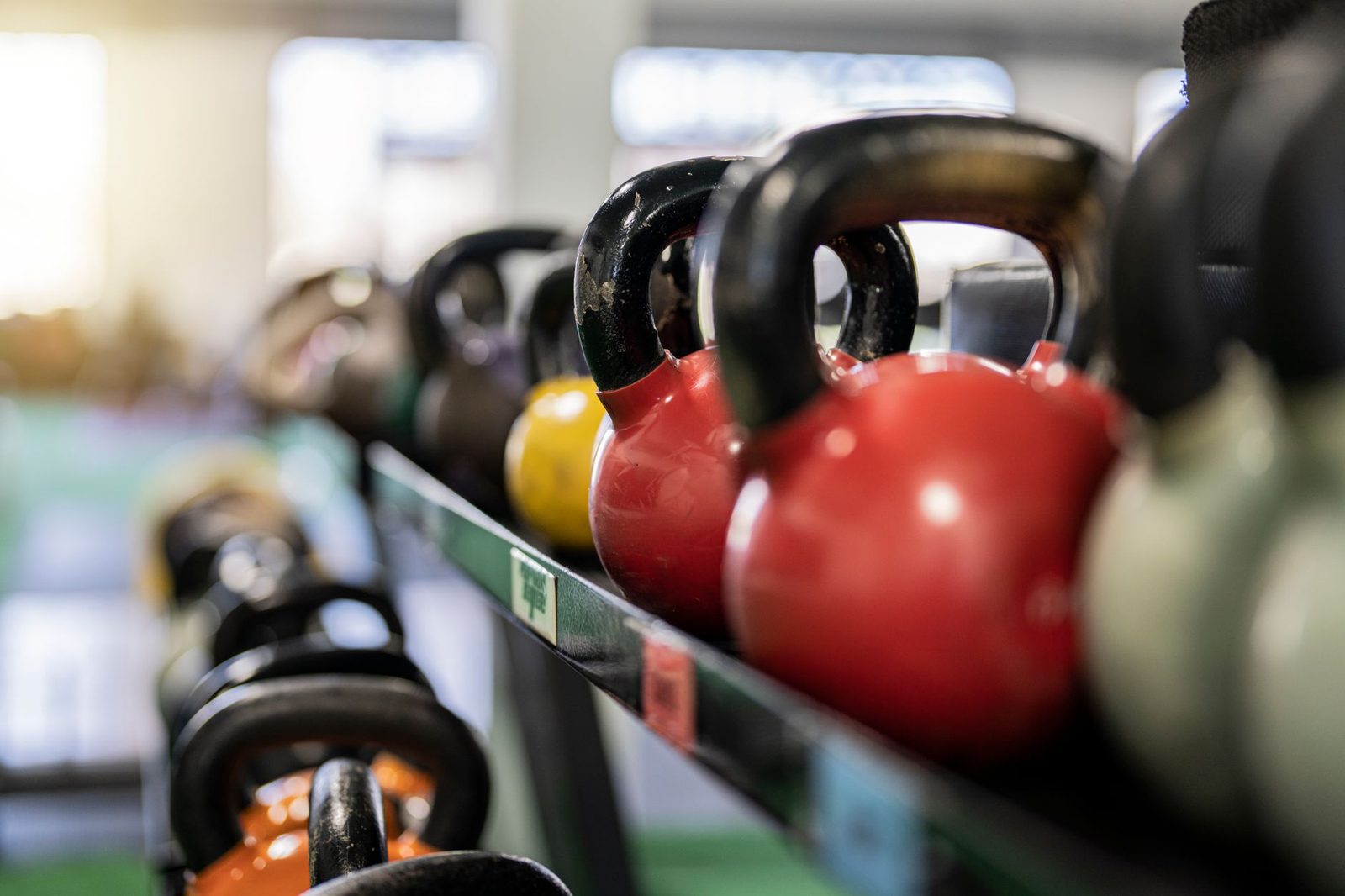
    A 2019 scoping review by Meigh and colleagues, published in BMC Sports Science, Medicine and Rehabilitation, describes the two main designs clearly. Kettlebell sport uses competition kettlebells of standardised dimensions made of steel, most commonly available from 8 kg to 32 kg in 2 to 4 kg increments. Kettlebells described as traditional in shape are typically made from cast iron, with dimensions increasing with weight.

    The review also notes that kettlebells are now widely available in many construction materials, from 2 kg to 92 kg.

    Comparison table

    Feature Competition kettlebell Cast iron kettlebell
    Material Steel Cast iron
    Size Same outer size at every weight Grows with the weight
    Handle Usually consistent and relatively slim Varies, often thicker on heavier bells
    Weight range Commonly 8 to 32 kg Very light to very heavy
    Weight steps Commonly 2 to 4 kg Varies by range
    Best for Kettlebell sport, high reps, consistent technique General strength, hardstyle training, goblet work

    Why consistent size matters

    In kettlebell sport, the main lifts are the jerk and the snatch, performed for repetitions within timed events, as Meigh and colleagues describe. Because a competition bell’s size and handle stay the same from light to heavy, the bell sits in the same place on your forearm in the rack and overhead positions whatever you are lifting. When you move up a weight, only the load changes, not your hand position or the way the bell rests on your arm.

    With cast iron bells, a heavier bell is physically larger. It may sit differently against your forearm, and the handle may be thicker and further from the body of the bell. Some lifters notice they need to adjust their technique slightly each time they move up.

    Kettlebell sport and hardstyle

    Meigh and colleagues explain that only a small number of kettlebell styles are widely recognised, including sport style and hardstyle. Kettlebell sport, also known as Girevoy sport, originated in Eastern Europe in 1948. The International Union of Kettlebell Lifting World Championship in October 2018 attracted more than 500 competitors from 32 countries.

    The review lists six fundamental hardstyle techniques: the swing, clean, press, squat, snatch and Turkish get-up, and notes that the two-handed swing is the most researched. Of the 99 publications in the scoping review, 33 studies explicitly used hardstyle techniques and 4 investigated kettlebell sport, so most of the research you will read about uses a hardstyle approach. Either type of bell can be used for hardstyle work.

    Which type suits you?

    Choose competition kettlebells if:

    • You are interested in kettlebell sport or high-repetition jerks and snatches.
    • You want your technique to stay identical as you move up in weight.
    • You plan to buy several bells over time and want a matched set.

    Choose cast iron kettlebells if:

    • You mainly want general strength and conditioning: swings, goblet squats, deadlifts, rows and presses.
    • You want lighter bells for beginners or mobility work, where cast iron is often available in smaller sizes.
    • You like thicker handles, which can be comfortable for two-handed swings and goblet holds.

    Features to check on either type

    • Handle finish: it should be smooth, without sharp seams or burrs that tear your hands.
    • Window size: the gap between the handle and the ball should fit your hand, or both hands for two-handed swings.
    • Flat base: a flat bottom keeps the bell stable on the floor.
    • Accurate weight: the marked weight should match the actual weight.
    • Coating: bare metal, paint and powder coat all feel different. A lightly textured finish can help grip; a slick one may slip when your hands sweat.

    Care and storage

    Task How often Why
    Wipe the handle After every session Sweat and chalk build-up make the handle slippery and speed up rust
    Check for cracks, burrs and chips Monthly Sharp edges can damage hands; cracks are a safety risk
    Store dry and off the floor where possible Always Iron and steel can rust in damp garages and sheds
    Keep away from children Always Research found young children were more prone to hand injuries from weights

    That last point comes from an analysis by Kerr and colleagues of weight training injuries in US emergency departments, which found that weights dropping on people was the most common cause of injury and that children aged 12 and under had a larger share of hand injuries. Store bells on a low shelf or rack, not at head height.

    Building a set over time

    Most people do not need a full range of bells at once. A common approach is to start with one bell you can deadlift and swing comfortably, add a lighter one for presses and get-ups, then add heavier bells as your strength improves. For reference, research on young men has typically used 12 to 16 kg bells for swings, and the BELL trial in adults aged 59 to 79 started participants with an 8 kg bell for home training before allocating heavier bells by capacity. Whichever design you choose, buying from the same range keeps handles and finishes consistent.

    Safe lifting from the floor

    Whatever type you choose, pick bells up with good handling technique. The Health and Safety Executive advises keeping a load close to your body, avoiding twisting, and not lifting more than you can easily manage. For kettlebells, that means hinging at the hips to pick the bell up, rather than reaching and rounding your back.

    The bottom line

    Competition kettlebells offer consistency for sport and high-repetition lifting. Cast iron kettlebells are versatile for general strength and conditioning. Neither is better for everyone. Choose based on how you train, learn the basics with a manageable weight, and look after your bells so they last for years.

    Health note: this article is general education, not medical advice. If you have a health condition, an injury, are pregnant, or have not exercised for a long time, check with your GP or a physiotherapist before starting or changing a training plan, and stop if an exercise causes pain.

    Sources

    • Meigh et al. (2019) Kettlebell training in clinical practice: a scoping review, BMC Sports Science, Medicine and Rehabilitation (europepmc.org)
    • Lake and Lauder (2012) Kettlebell swing training improves maximal and explosive strength, Journal of Strength and Conditioning Research (europepmc.org)
    • Meigh et al. (2022) Effects of supervised high-intensity hardstyle kettlebell training on grip strength and health-related physical fitness in insufficiently active older adults: the BELL trial, BMC Geriatrics (europepmc.org)
    • Kerr, Collins and Comstock (2010) Epidemiology of weight training-related injuries presenting to United States emergency departments, 1990 to 2007, American Journal of Sports Medicine (europepmc.org)
    • Good handling technique, Health and Safety Executive (hse.gov.uk)
  • Beginner Kettlebell Workout: A Simple Full-Body Plan

    Beginner Kettlebell Workout: A Simple Full-Body Plan

    Quick answer: do this full-body kettlebell workout two or three times a week on non-consecutive days. It uses the deadlift, goblet squat, swing, row, press and carry to cover the major muscle groups the NHS recommends training at least twice a week. Start with light to moderate bells, do 2 to 3 sets of 8 to 12 reps, and progress by adding reps, then sets, then weight.

    What you need

    • One or two kettlebells: a lighter one for pressing and rows, a heavier one for deadlifts, squats and swings.
    • A clear space with room in front and behind for swings.
    • A flat, non-slip floor or mat.
    • About 30 to 40 minutes.

    Is kettlebell training suitable for beginners?

    With sensible progression, yes. In the BELL trial by Meigh and colleagues (2022), previously insufficiently active adults aged 59 to 79 took part in three months of supervised, progressive hardstyle kettlebell training. Compliance was 91.5%, there were four non-serious adverse events, and participants improved grip strength, six-minute walk distance, deadlift strength and sit-to-stand performance. In working adults, Jay and colleagues (2011) found that eight weeks of kettlebell training, three times a week, reduced neck, shoulder and lower back pain and improved back strength, although it did not improve aerobic fitness.

    The overall evidence is still limited. A 2019 scoping review found that most kettlebell studies were small and of low quality, so kettlebells are best seen as one useful tool within a balanced routine.

    Warm-up (5 minutes)

    1. March on the spot or walk briskly for 2 minutes.
    2. Arm circles and shoulder rolls, 10 each way.
    3. Bodyweight hip hinges, 10 reps, pushing the hips back.
    4. Bodyweight squats, 10 reps.
    5. One light set of kettlebell deadlifts, 8 reps.

    The workout

    Order Exercise Sets x reps Rest Bell
    1 Kettlebell deadlift 3 x 8 to 12 60 to 90 seconds Heavier
    2 Goblet squat 3 x 8 to 12 60 to 90 seconds Heavier or lighter
    3 Two-handed swing 5 x 10 Until breathing settles Heavier
    4 Single-arm row 2 to 3 x 8 to 12 each side 60 seconds Heavier or lighter
    5 Single-arm overhead press 2 to 3 x 6 to 10 each side 60 seconds Lighter
    6 Suitcase carry 2 x 20 to 30 metres each hand 60 seconds Heavier

    This order follows ACSM’s 2009 advice to place larger, multi-joint exercises before smaller ones. If you are completely new to kettlebells, replace swings with extra deadlifts for the first two weeks while you learn the hinge.

    Exercise guide

    Kettlebell deadlift

    Stand with the bell between your feet. Push your hips back, keep your back neutral, grip the handle and stand tall. Keep the bell close to you, as the Health and Safety Executive’s handling guidance advises for any load.

    Goblet squat

    Hold the bell by the horns at chest height. Squat down between your knees as far as is comfortable with your chest up, then stand.

    Two-handed swing

    Hike the bell back between your thighs, then snap your hips forward so it floats to chest height. Your arms stay relaxed; the power comes from your hips. McGill and Marshall (2012) described the swing as a hip-hinge pattern with high glute and back muscle activation.

    Single-arm row

    Brace one hand on a bench or sturdy chair, hold the bell in the other, and pull it towards your hip. Lower slowly.

    Single-arm overhead press

    Clean or lift the bell to the rack position, where it rests on the back of your forearm at shoulder height. Brace and press it overhead without leaning back.

    Suitcase carry

    Hold a heavy bell in one hand and walk tall without leaning to the side. Switch hands.

    Eight-week plan

    Weeks Sessions per week Focus Progression
    1 to 2 2 Technique: hinge, squat, press; swings only once the deadlift is solid 2 sets, light bells
    3 to 4 2 Working sets with 2 to 3 reps in reserve 3 sets; add reps each session
    5 to 6 2 to 3 Build swing volume Increase swings to 6 to 8 sets of 10
    7 to 8 2 to 3 Move up a bell where reps are easy Heavier bell for deadlifts, squats or swings

    ACSM’s 2009 guidance recommends two to three sessions a week for novices and a 2 to 10% load increase once you can do one or two reps above your target. Because kettlebells often jump in bigger steps, adding reps and sets first is a practical approach. ACSM’s 2026 guidance adds that finishing sets with two or three reps in reserve gives similar results to training to failure, with less fatigue.

    Pair it with aerobic activity

    The NHS recommends adults aim for 150 minutes of moderate aerobic activity a week, in addition to strength work on at least two days. Swings raise your heart rate, and Farrar and colleagues (2010) found continuous swings pushed heart rate to about 87% of maximum. However, Jay and colleagues’ trial did not find an improvement in aerobic fitness, so keep walking, cycling or other aerobic activity in your week too.

    Safety reminders

    • Keep children and pets out of the room during swings.
    • Stop any exercise that causes pain, particularly in your back or shoulders.
    • Put the bell down under control at the end of every set.
    • If possible, have a qualified coach check your swing and press technique.

    Health note: this article is general education, not medical advice. If you have a health condition, an injury, are pregnant, or have not exercised for a long time, check with your GP or a physiotherapist before starting or changing a training plan, and stop if an exercise causes pain.

    Sources

    • Meigh et al. (2022) Effects of supervised high-intensity hardstyle kettlebell training on grip strength and health-related physical fitness in insufficiently active older adults: the BELL trial, BMC Geriatrics (europepmc.org)
    • Jay et al. (2011) Kettlebell training for musculoskeletal and cardiovascular health: a randomized controlled trial, Scandinavian Journal of Work, Environment and Health (europepmc.org)
    • Meigh et al. (2019) Kettlebell training in clinical practice: a scoping review, BMC Sports Science, Medicine and Rehabilitation (europepmc.org)
    • ACSM position stand: Progression models in resistance training for healthy adults (2009), Medicine and Science in Sports and Exercise (europepmc.org)
    • ACSM unveils landmark 2026 resistance training guidelines, American College of Sports Medicine (acsm.org)
    • Good handling technique, Health and Safety Executive (hse.gov.uk)
    • McGill and Marshall (2012) Kettlebell swing, snatch, and bottoms-up carry: back and hip muscle activation, motion, and low back loads, Journal of Strength and Conditioning Research (europepmc.org)
    • Farrar, Mayhew and Koch (2010) Oxygen cost of kettlebell swings, Journal of Strength and Conditioning Research (europepmc.org)
    • Physical activity guidelines for adults aged 19 to 64, NHS (nhs.uk)
  • Adjustable vs Fixed Dumbbells: Which Suits Your Home Training?

    Adjustable vs Fixed Dumbbells: Which Suits Your Home Training?

    Quick answer: adjustable dumbbells give you a wide range of weights in a small footprint, which suits most home trainers with limited space. Fixed dumbbells are quicker to use, more robust and better if several people train at once or you like fast circuits. Research shows equipment type matters far less than training consistently, so pick the option that fits your space, budget, and how you like to train.

    The key difference

    A fixed dumbbell is one weight, permanently. An adjustable dumbbell lets you change the load, either by adding and removing plates secured with collars (spin-lock style), or by using a dial, pin or slide to select a stack of plates (selectorised style). Both let you train every muscle group; the difference is convenience, space and durability.

    Why choice of equipment matters less than you think

    ACSM’s 2026 resistance training position stand, based on 137 systematic reviews, emphasises that the biggest gains come from doing resistance training regularly, working all major muscle groups at least twice a week. One of its authors summed it up by saying the best programme is the one you will actually stick with. So the question is really which type of dumbbell you are more likely to use, week after week.

    Head to head

    Factor Adjustable Fixed
    Floor space One pair and a stand or cradle A rack for each set of pairs
    Weight range Wide range from one pair Only the pairs you own
    Speed of changing weight Seconds for selectorised; slower for spin-lock Instant, pick up the next pair
    Weight steps Set by the design, sometimes coarse Set by which pairs you buy
    Durability Mechanisms need care; not for dropping Very robust, especially rubber hex
    Feel in the hand Can be bulky or long at lighter settings Compact at every weight
    Multiple users at once Awkward Easy
    Safety checks Check collars or selector every set Check heads are tight periodically

    The case for adjustable dumbbells

    • Space: a single pair can replace a rack of many pairs, which matters in flats and spare rooms.
    • Room to grow: progressive overload means you will need heavier weights over time. ACSM’s 2009 position stand recommends increasing load by 2 to 10% when you can beat your target reps by one or two, and adjustable sets make those steps available without buying new pairs.
    • Different muscle groups: legs and back usually need more load than shoulders and arms, and an adjustable pair can cover all of them.

    The case for fixed dumbbells

    • Speed: for supersets, circuits or drop sets, grabbing the next pair is quicker than adjusting.
    • Robustness: fixed dumbbells, especially rubber hex, tolerate everyday knocks better than mechanisms do.
    • Handling: they are usually shorter and more compact, which helps with exercises where the dumbbell moves close to your body, such as goblet squats or lateral raises.
    • Shared use: two people can train at once without waiting.

    Safety with each type

    An analysis of US emergency department cases by Kerr and colleagues found that weights dropping on people was the most common cause of weight training injuries, at 65.5% of cases, with 90.4% of injuries involving free weights. With adjustable dumbbells, the main risk is a plate coming loose, so:

    • Check spin-lock collars are tight before every set; they can loosen as you train.
    • Make sure a selectorised dial or pin is fully engaged and the dumbbell lifts cleanly from its cradle.
    • Return selectorised dumbbells to their cradle carefully rather than dropping them.

    With fixed dumbbells, the main risks are clutter and rolling. Rack them after each set, and choose hex heads if your floor is uneven.

    Weight steps and progression

    Look closely at how the weights increase. Small, even steps make it easier to progress gradually on smaller exercises such as shoulder raises. Larger steps can be fine for squats and deadlifts but may be too big a jump for lighter movements. If a step is too large, you can keep the weight and add reps until you are ready; a 2022 study by Plotkin and colleagues found that progressing reps at a fixed load produced broadly similar results to progressing load over eight weeks.

    Care and maintenance

    Task Adjustable Fixed
    Before each session Check collars, selectors and plates Quick visual check
    After each session Wipe handles; return to stand Wipe handles; return to rack
    Monthly Inspect threads, pins and plate slots; follow maker’s guidance Check heads are tight; look for cracked coatings
    Storage Dry, level surface; out of children’s reach Rack or low shelf; dry space

    Questions to ask before you decide

    1. What will you train? The NHS recommends working the legs, hips, back, abdomen, chest, shoulders and arms on at least two days a week. List the exercises you plan to do and the rough weight range each needs.
    2. Where will the dumbbells live? Measure the space. A rack of fixed pairs needs more room than most people expect.
    3. How do you like to train? Straight sets with plenty of rest suit adjustable dumbbells well. Fast circuits and supersets favour fixed pairs.
    4. Who else will use them? Households with more than one lifter often find fixed pairs, or a mix, less frustrating.
    5. How heavy will you need to go? Check the maximum weight of any adjustable design against where you want your leg and back training to be in a year or two.

    Which should you choose?

    • Small space, one user, long-term progression: adjustable.
    • Circuits, shared training, rough use: fixed.
    • Best of both: an adjustable pair for heavier lifts plus one or two light fixed pairs for shoulder work and warm-ups is a popular combination.

    The bottom line

    Both types build strength and muscle. Choose based on space, how you train and who you train with, check your equipment regularly, and focus your energy on training consistently at least twice a week.

    Health note: this article is general education, not medical advice. If you have a health condition, an injury, are pregnant, or have not exercised for a long time, check with your GP or a physiotherapist before starting or changing a training plan, and stop if an exercise causes pain.

    Sources

    • ACSM unveils landmark 2026 resistance training guidelines, American College of Sports Medicine (acsm.org)
    • ACSM position stand: Progression models in resistance training for healthy adults (2009), Medicine and Science in Sports and Exercise (europepmc.org)
    • Kerr, Collins and Comstock (2010) Epidemiology of weight training-related injuries presenting to United States emergency departments, 1990 to 2007, American Journal of Sports Medicine (europepmc.org)
    • Plotkin et al. (2022) Progressive overload without progressing load? The effects of load or repetition progression on muscular adaptations, PeerJ (europepmc.org)
    • Physical activity guidelines for adults aged 19 to 64, NHS (nhs.uk)