
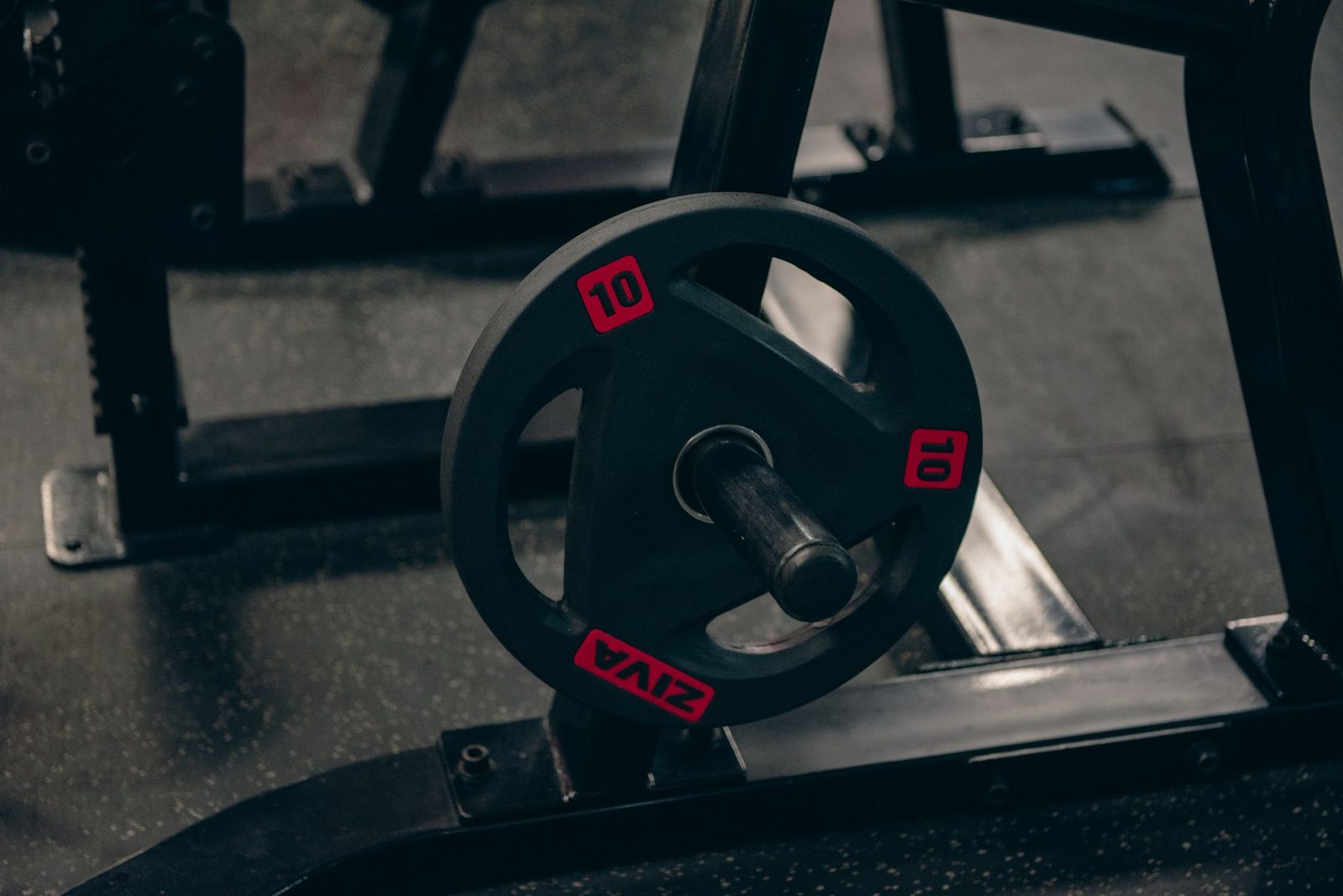
Quick answer: progressive overload means gradually increasing the demand on your muscles so they keep adapting. With free weights you can do this by adding load, adding repetitions, adding sets, or improving control and range of movement. ACSM guidance suggests increasing the load by 2 to 10% once you can complete one or two reps more than your target, and research shows adding reps at a fixed weight can work nearly as well as adding weight.
What progressive overload means
Your body adapts to the work you give it. If you lift the same weight for the same reps week after week, there is little reason for it to keep changing. The American College of Sports Medicine’s 2009 position stand on progression models states that progressive resistance training protocols are necessary to stimulate further adaptation towards specific goals.
Overload does not mean lifting as heavy as possible. It means asking for a little more than last time, in a controlled way, over a long period.
Five ways to progress with free weights
| Method | Example | Best used when |
|---|---|---|
| Add load | Goblet squat moves from 12 kg to 14 kg | You beat your target reps by one or two on every set |
| Add repetitions | 3 sets of 8 becomes 3 sets of 10 with the same dumbbells | The next weight up is a big jump, common with home equipment |
| Add sets | 2 sets of an exercise becomes 3 | You want more weekly volume for a muscle group |
| Improve range and control | Slower lowering, deeper comfortable squat, pause at the bottom | Technique is still developing |
| Harder variation | Two-arm row becomes one-arm row; goblet squat becomes split squat | You have run out of weight on your equipment |
The double progression method
For home lifters with a limited set of weights, double progression is a simple, reliable approach. You choose a rep range, for example 8 to 12, and a weight you can lift for 8 good reps.
- Each session, try to add a rep to one or more sets while keeping the same weight.
- When you can do 12 good reps on every set, move up to the next weight.
- Your reps will drop back towards 8. Build them up again, and repeat.
This fits closely with ACSM’s 2009 guidance, which recommends a 2 to 10% increase in load when a person can perform the current workload for one to two repetitions over the desired number. It also fits the NHS suggestion of 8 to 12 repetitions per set.
Is adding reps as good as adding weight?
A 2022 study by Plotkin and colleagues, published in PeerJ, tested exactly this. Forty-three trained men and women either increased load while keeping reps constant, or increased reps while keeping load constant, for eight weeks. Muscle growth slightly favoured the reps group in one thigh muscle, and strength slightly favoured the load group, but the differences were of questionable practical significance. The authors concluded that both approaches appear to be viable.
That is good news if your dumbbells go up in large steps. You can keep progressing by adding reps until the next weight becomes manageable.
Heavier or lighter weights?
A 2017 meta-analysis by Schoenfeld and colleagues compared low-load (60% of one-rep max or less) and high-load training, with sets taken to failure. Gains in maximal strength were greater with heavy loads, but muscle growth was similar across the loading spectrum. ACSM’s 2026 position stand points to around 80% of one-rep max for 2 to 3 sets when the goal is strength.
So if you mainly want muscle and general fitness, a range of rep targets can work. If you want maximal strength, you will eventually need to lift heavier loads for fewer reps.
More sets, more growth, up to a point
Volume is another lever. A 2017 meta-analysis by Schoenfeld, Ogborn and Krieger found a graded dose-response relationship between weekly sets and muscle growth, meaning more weekly sets tended to produce more growth. ACSM’s 2026 guidance suggests roughly 10 sets per muscle group per week for hypertrophy. Beginners do not need to start there, and ACSM’s 2009 guidance also highlights that the right amount depends on training experience.
How often to train
A 2018 meta-analysis by Grgic and colleagues found that strength gains increased with training frequency overall, but when weekly volume was equal, frequency itself made no significant difference. In practice, training a muscle group two or three times a week is a convenient way to spread your sets, and it matches the NHS and UK Chief Medical Officers’ recommendation of at least two days a week.
Signs you are progressing too fast
- Your technique changes as the set goes on, such as a rounding back on a hinge or a rushed lowering phase.
- You regularly miss reps you hit comfortably last week.
- Joints, rather than muscles, feel sore after sessions.
- Sleep, energy or motivation are dropping for a sustained period.
If you notice these, hold or reduce the load for a week or two and rebuild. The UK Chief Medical Officers describe starting low and building up as your body adjusts as the safest approach, and that applies to every stage of training, not just the first week.
Keep a training log
You cannot progress what you do not measure. Record the exercise, weight, sets, reps and how hard it felt for each session. Over a few weeks the log will show you which lifts are moving and which have stalled, so you can decide whether to add a rep, add weight or change the variation.
Putting it into practice
Pick four to six free weight exercises that cover your legs, hips, back, chest, shoulders and arms. Use a rep range of 8 to 12, finish sets with two or three reps in reserve, and apply double progression. Review your log every few weeks. That simple system, repeated patiently, is progressive overload.
Health note: this article is general education, not medical advice. If you have a health condition, an injury, are pregnant, or have not exercised for a long time, check with your GP or a physiotherapist before starting or changing a training plan, and stop if an exercise causes pain.
Sources
- ACSM position stand: Progression models in resistance training for healthy adults (2009), Medicine and Science in Sports and Exercise (europepmc.org)
- ACSM unveils landmark 2026 resistance training guidelines, American College of Sports Medicine (acsm.org)
- Plotkin et al. (2022) Progressive overload without progressing load? The effects of load or repetition progression on muscular adaptations, PeerJ (europepmc.org)
- Schoenfeld et al. (2017) Strength and hypertrophy adaptations between low- vs. high-load resistance training: a systematic review and meta-analysis, Journal of Strength and Conditioning Research (europepmc.org)
- Schoenfeld, Ogborn and Krieger (2017) Dose-response relationship between weekly resistance training volume and increases in muscle mass, Journal of Sports Sciences (europepmc.org)
- Grgic et al. (2018) Effect of resistance training frequency on gains in muscular strength: a systematic review and meta-analysis, Sports Medicine (europepmc.org)
- How to improve your strength and flexibility, NHS (nhs.uk)
- UK Chief Medical Officers’ physical activity guidelines (2019), Department of Health and Social Care (gov.uk)
Leave a Reply